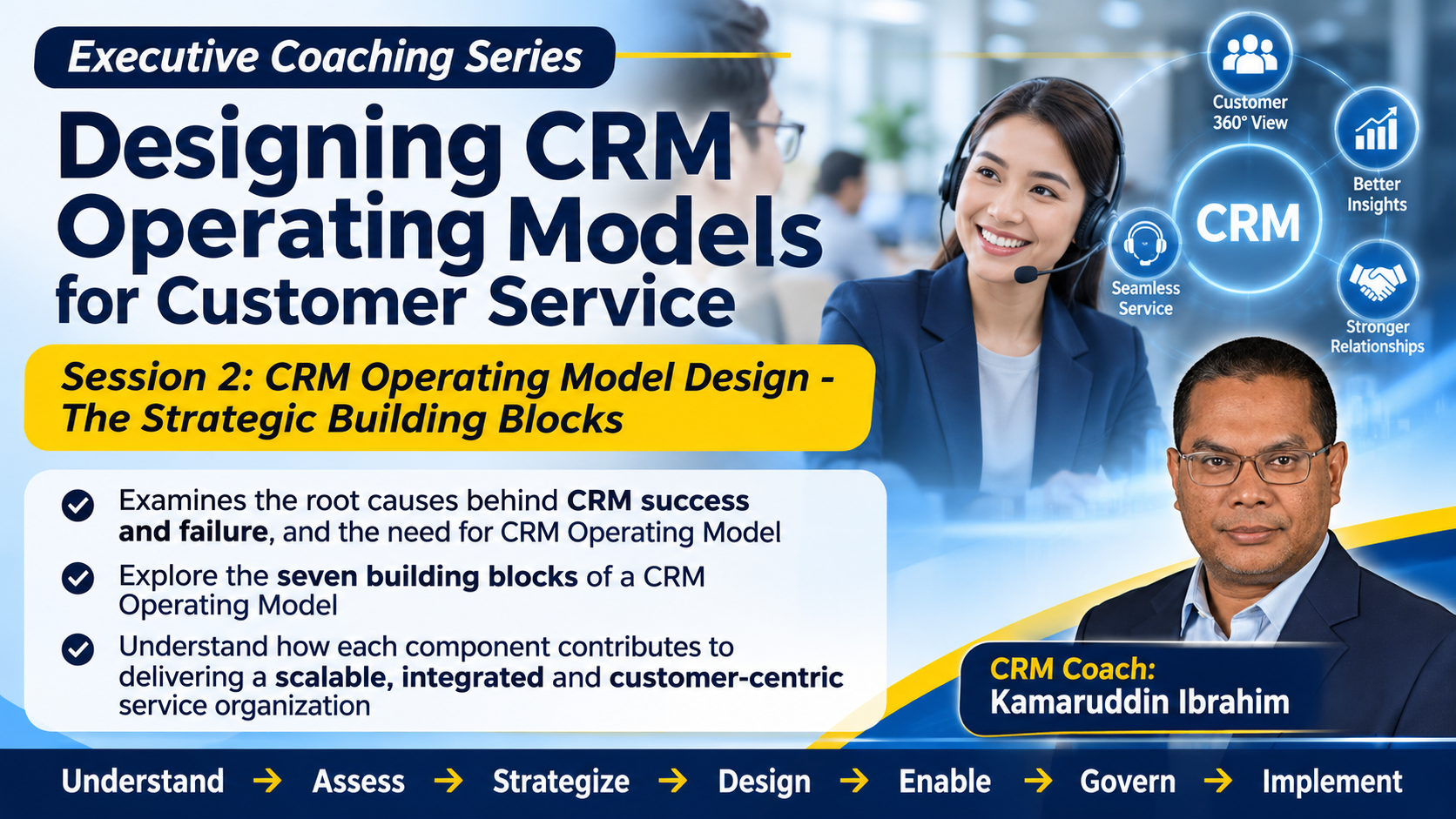
Session 2: CRM Operating Model Design - The Strategic Building Blocks (2 Hours Coaching)
As customer expectations continue to evolve, organizations must deliver consistent, efficient and personalized service across every touchpoint. A well-designed CRM Operating Model is essential to ensure that customer service operations are not only aligned with strategic goals but also enabled by the right technology, data, processes, change management practices and governance. This executive coaching series is designed for senior leaders, managers, customer service professionals and transformation teams who wish to establish or enhance their Customer Relationship Management (CRM) capabilities within customer service operations. Through ten guided coaching sessions, participants will assess their organization's CRM maturity and readiness, formulate a practical CRM strategy, design customer-focused processes, define supporting data and technology requirements and establish the governance and change management practices needed for successful implementation. Each session combines executive coaching, practical workshops and real business application to help participants progressively develop a CRM Operating Model tailored to their organizational needs. The coaching sessions follow the logical progression of a CRM transformation journey: Understand → Assess → Strategize → Design → Enable → Govern → Implement Each session will be conducted as a 120-minute coaching session, comprising: 30% Knowledge Transfer 40% Guided Discussion 20% Practical Workshop 10% Coaching Feedback and Assignment Review Session 2 (CRM Operating Model Design - The Strategic Building Blocks) examines the root causes behind CRM success and failure, and the need for CRM Operating Model as a framework for translating CRM strategy into sustainable business outcomes. Participants will explore the seven building blocks of a CRM Operating Model and understand how each component contributes to delivering a scalable, integrated and customer-centric service organization. These building blocks will form the foundation for the remaining coaching sessions. Objectives Understand the common reasons CRM initiatives fail to deliver expected value. Understand the purpose, principle and value of a CRM Operating Model. Introduce the seven building blocks of a CRM Operating Model. Establish a foundation for CRM Target Operating Model Learning Outcomes Upon completion of this session, participants will be able to: Identify the key causes of CRM implementation failures. Explain why CRM success requires alignment across multiple business dimensions. Describe the role of a CRM Operating Model in supporting transformation. Understand the relationship between strategy, processes, data, technology, people and governance. Explain the seven building blocks that collectively enable CRM success. Coaching Activity CRM Reflection Exercise Participants identifies issues from CRM initiatives and discuss how a structured CRM Operating Model could have addressed these challenges.
How it works
- 1. Pick your hoursChoose from Kamaruddin's free hours and pay online.
- 2. Say what you needYour note helps them prepare.
- 3. MeetOnline from your booking, or at the place you agree. We remind you a day and an hour before.
About this coaching
As customer expectations continue to evolve, organizations must deliver consistent, efficient and personalized service across every touchpoint. A well-designed CRM Operating Model is essential to ensure that customer service operations are not only aligned with strategic goals but also enabled by the right technology, data, processes, change management practices and governance.
This executive coaching series is designed for senior leaders, managers, customer service professionals and transformation teams who wish to establish or enhance their Customer Relationship Management (CRM) capabilities within customer service operations. Through ten guided coaching sessions, participants will assess their organization's CRM maturity and readiness, formulate a practical CRM strategy, design customer-focused processes, define supporting data and technology requirements and establish the governance and change management practices needed for successful implementation. Each session combines executive coaching, practical workshops and real business application to help participants progressively develop a CRM Operating Model tailored to their organizational needs.
The coaching sessions follow the logical progression of a CRM transformation journey:
Understand → Assess → Strategize → Design → Enable → Govern → Implement
Each session will be conducted as a 120-minute coaching session, comprising:
- 30% Knowledge Transfer
- 40% Guided Discussion
- 20% Practical Workshop
- 10% Coaching Feedback and Assignment Review
Session 2 (CRM Operating Model Design - The Strategic Building Blocks) examines the root causes behind CRM success and failure, and the need for CRM Operating Model as a framework for translating CRM strategy into sustainable business outcomes. Participants will explore the seven building blocks of a CRM Operating Model and understand how each component contributes to delivering a scalable, integrated and customer-centric service organization. These building blocks will form the foundation for the remaining coaching sessions.
Objectives
- Understand the common reasons CRM initiatives fail to deliver expected value.
- Understand the purpose, principle and value of a CRM Operating Model.
- Introduce the seven building blocks of a CRM Operating Model.
- Establish a foundation for CRM Target Operating Model
Learning Outcomes
Upon completion of this session, participants will be able to:
- Identify the key causes of CRM implementation failures.
- Explain why CRM success requires alignment across multiple business dimensions.
- Describe the role of a CRM Operating Model in supporting transformation.
- Understand the relationship between strategy, processes, data, technology, people and governance.
- Explain the seven building blocks that collectively enable CRM success.
Coaching Activity
CRM Reflection Exercise Participants identifies issues from CRM initiatives and discuss how a structured CRM Operating Model could have addressed these challenges.
What you'll get
- CRM Operating Model Framework
- The adoption trap and the root causes of CRM failure
Your trainer
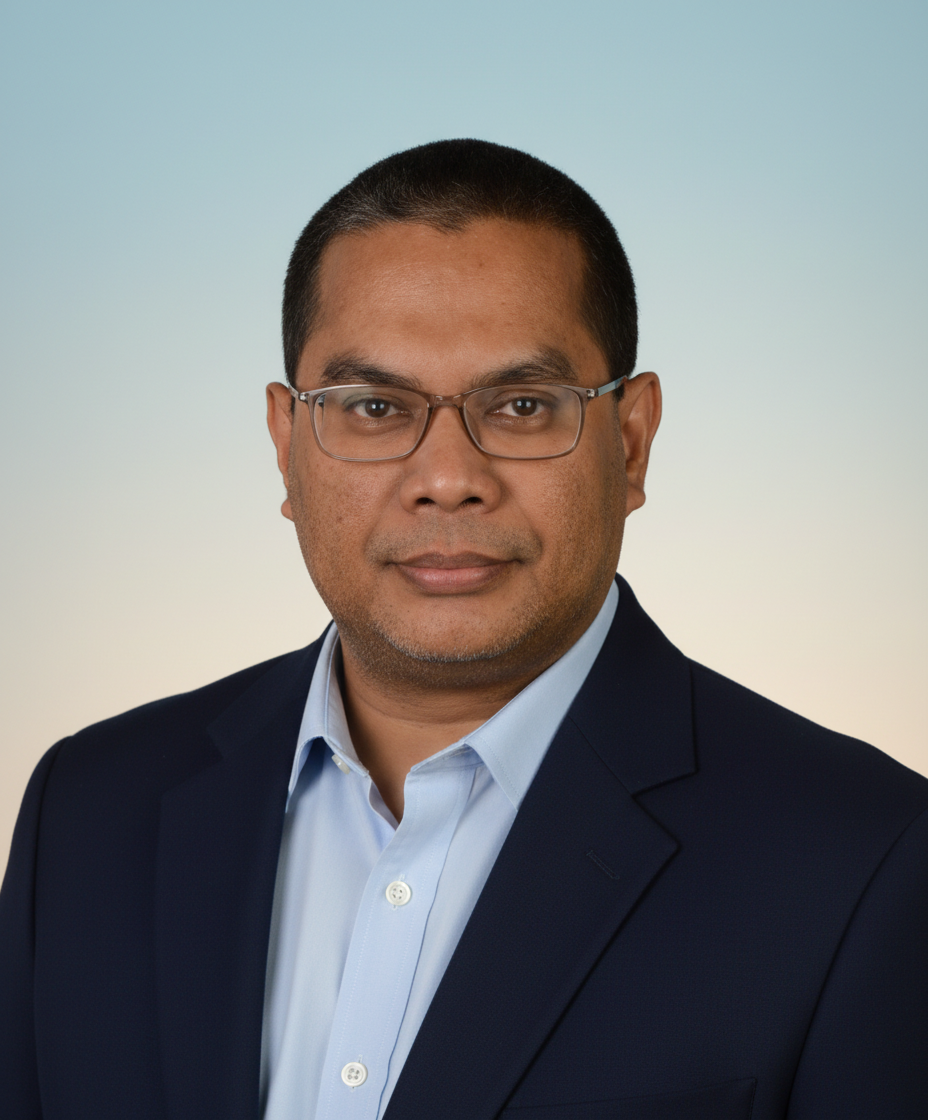
I'm a CRM specialist with 21+ years of experience delivering transformation programmes across Asia Pacific. I help professionals and organisations unlock the full value of CRM, build CRM operating models and improve CRM adoption. Certified in AI for Business (Wharton) & Generative & Agentic AI (Oxford), I deliver consulting & training services that bridge AI & CRM for measurable business outcomes. Author: Predictive AI in Financial Services: From Idea to Impact (Amazon - https://a.co/d/7XfIV47).